There’s something about a well-designed bathroom that quietly changes the mood of a home. It’s not always about expensive fixtures or dramatic lighting. Sometimes it’s simply the materials you choose. Natural stone, for example, carries a character that manufactured surfaces often struggle to replicate. The subtle veins, the imperfect textures, the way light plays across the surface — it all adds a sense of calm and authenticity.
Over the past few years, homeowners and designers alike have started leaning back toward natural finishes. Maybe it’s a reaction to overly polished interiors, or maybe people just want spaces that feel a little more grounded. Whatever the reason, stone tiles have become a favorite again. And when used thoughtfully, they can transform an ordinary bathroom into something quietly luxurious.
Why Natural Stone Still Feels Special
One of the biggest advantages of natural stone is that no two pieces look exactly alike. That uniqueness creates depth in a room. Even if the design is minimal, the material itself tells a story through its subtle variations.
Stone also has a way of aging gracefully. Instead of looking worn out over time, it often gains character. Think of historic homes or boutique hotels where the bathrooms still look elegant decades later — natural materials usually play a big role in that.
Another benefit people sometimes overlook is versatility. Stone works beautifully in modern, traditional, or even rustic designs. It can be polished for a sleek look or left slightly textured for a more relaxed, organic feel.
The Timeless Appeal of Marble in Bathroom Design
If there’s one material that consistently shows up in classic interiors, it’s marble. Designers have loved it for centuries, and honestly, it’s easy to understand why. Marble has a quiet sophistication that doesn’t feel trendy or temporary.
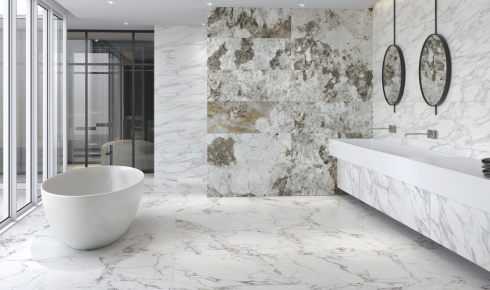
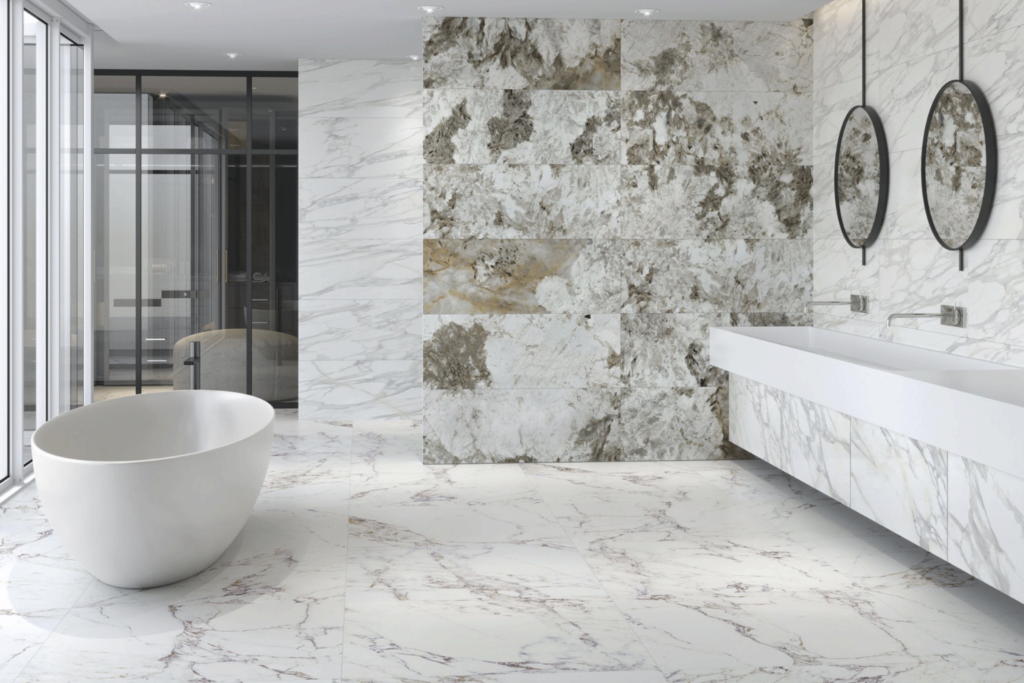
Using marble tile for bathroom surfaces instantly elevates the space. Whether it’s applied to floors, walls, or vanity backsplashes, the soft veining patterns bring movement without overwhelming the room. White marble, in particular, has a way of making smaller bathrooms appear brighter and more open.
Of course, marble does require a bit of care. It’s slightly more porous than some other stones, so sealing it properly helps maintain its beauty. But many homeowners find the maintenance worth it for the elegance it provides.
Warm, Earthy Character with Travertine
Not everyone wants the cool, polished look of marble. Some people prefer materials that feel warmer and a bit more relaxed. That’s where travertine steps in.
Travertine has been used in architecture for thousands of years — even ancient Roman structures incorporated it. Its naturally warm tones, usually ranging from beige to soft gold, create a welcoming atmosphere in bathrooms.
Installing travertine tile flooring can make the entire room feel more grounded and spa-like. Unlike high-gloss tiles that reflect a lot of light, travertine often has a softer finish that feels comfortable underfoot. It’s a great option for homeowners who want their bathroom to feel less like a showroom and more like a retreat.
Another advantage is durability. When sealed properly, travertine holds up well in wet environments. And because the tones are naturally varied, small marks or wear tend to blend in rather than stand out.
Adding Texture with Mosaic Shower Designs
While large stone tiles create a clean, elegant look, sometimes a little detail can bring a design together. That’s where mosaic tiles become interesting.
Small tiles arranged in patterns can add texture, contrast, and visual interest without overwhelming the space. In showers especially, mosaics can break up large surfaces and create subtle focal points.
A marble mosaic tile shower is a great example of how detail can elevate a design. The small pieces reflect light slightly differently than larger slabs, which gives the shower walls a dynamic look. Hexagon patterns, herringbone layouts, or simple grid designs can all work beautifully depending on the overall style of the bathroom.
Mosaics also have practical benefits. Because they include more grout lines, they provide additional grip underfoot, which can be helpful in wet shower areas.
Balancing Materials for a Cohesive Bathroom
Designing a bathroom with natural stone isn’t just about picking one beautiful tile. It’s about balancing materials so the room feels harmonious rather than overwhelming.
For example, pairing marble walls with travertine floors can create contrast without clashing. Adding wood cabinetry or matte black fixtures can soften the overall look and prevent the space from feeling too cold or formal.
Lighting matters too. Natural stone looks different depending on how light hits it. Soft, warm lighting tends to highlight the textures and veins within the stone, giving the room a more inviting atmosphere.
Even small details like grout color or trim pieces can influence the final result. Designers often recommend choosing grout tones that complement the stone rather than sharply contrast it, which helps maintain a cohesive appearance.
Creating a Bathroom That Ages Beautifully
Trends come and go. What looks cutting-edge today can sometimes feel dated surprisingly quickly. Natural stone, however, tends to resist that cycle. Its appeal feels rooted in tradition rather than fashion.
A bathroom designed with marble, travertine, or mosaic stone tiles doesn’t scream for attention. Instead, it quietly stands the test of time. Years later, it still feels thoughtful, balanced, and comfortable.
In the end, that might be the real value of natural materials. They don’t just decorate a space — they give it personality. And when you step into a bathroom that’s been designed with that kind of care, you notice the difference immediately, even if you can’t quite explain why.