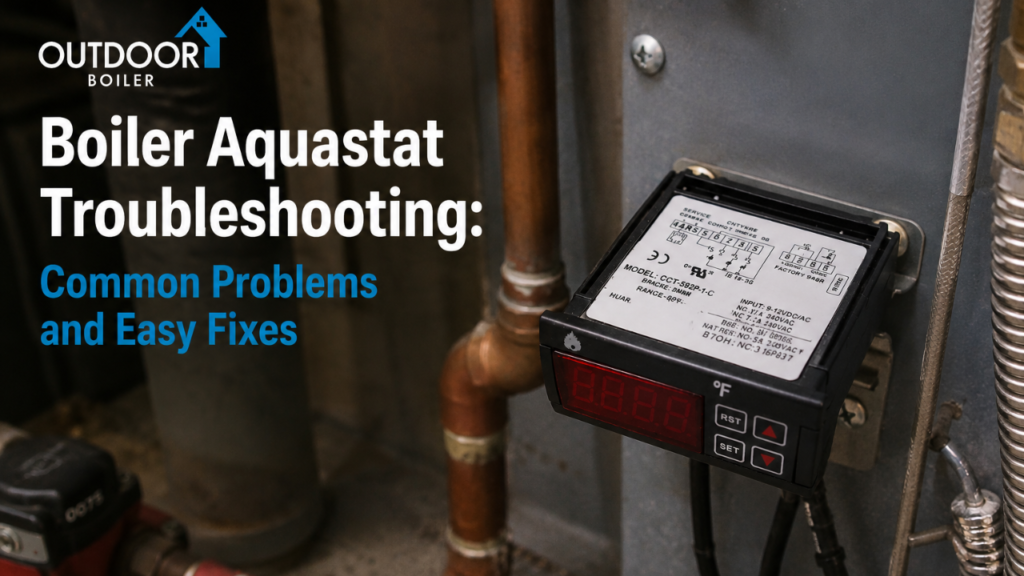
If your boiler is not heating your home properly, runs constantly, or cycles on and off more often than usual, the problem may not be the boiler itself. In many cases, the issue comes from the boiler aquastat.
The aquastat is one of the most important control components in a hot water heating system. It monitors water temperature and tells the burner and circulator pump when to turn on and off. When it stops working correctly, your entire heating system can become less efficient and less reliable.
In this guide, we will explain how a boiler aquastat works, the most common problems homeowners experience, practical troubleshooting steps, and when it is time to call a heating professional.
What Is a Boiler Aquastat?
A boiler aquastat is a temperature control device installed on most hot water boilers. Its primary job is to monitor the temperature of the boiler water and maintain it within a preset range.
Depending on your heating system, the aquastat may control:
- The burner
- The circulator pump
- High temperature limits
- Low temperature limits
- Domestic hot water priority
By keeping water at the correct temperature, the aquastat helps your boiler operate safely and efficiently.
How Does a Boiler Aquastat Work?
Inside the aquastat is a temperature-sensing element that constantly monitors the water temperature inside the boiler.
When the water temperature drops below the desired setting, the aquastat signals the burner to ignite and begin heating the water.
Once the water reaches the high limit, the aquastat shuts the burner off to prevent overheating.
Many systems also use the aquastat to determine when the circulator pump should move heated water throughout the home.
Signs Your Boiler Aquastat May Be Failing
A faulty aquastat often produces noticeable symptoms before it completely stops working.
Common warning signs include:
- The boiler runs continuously.
- The boiler never reaches the desired temperature.
- Heat is inconsistent throughout the home.
- The boiler short cycles.
- The circulator pump never starts.
- Water becomes excessively hot.
- Energy bills suddenly increase.
- The boiler frequently shuts down unexpectedly.
These symptoms can also indicate other heating system problems, which is why proper diagnosis is important.
Common Boiler Aquastat Problems
Incorrect Temperature Settings
Sometimes the aquastat is working correctly, but the settings have been changed accidentally.
High limit settings that are too low may prevent your home from reaching a comfortable temperature.
Settings that are too high can waste energy and place unnecessary stress on the heating system.
Always consult your boiler manufacturer’s recommendations before making adjustments.
Dirty or Corroded Sensor
Over time, mineral buildup, corrosion, or moisture can interfere with the aquastat’s temperature sensor.
A dirty sensor may provide inaccurate readings, causing the boiler to heat at the wrong times.
Routine maintenance helps reduce this issue.
Electrical Connection Problems
Loose wiring or damaged electrical connections can interrupt communication between the aquastat, burner, and circulator pump.
Common signs include:
- Intermittent heating
- Random shutdowns
- Failure to start
Always disconnect power before inspecting electrical components.
Faulty Relay Switch
Many aquastats contain internal relay switches that activate different parts of the heating system.
When these relays fail, the burner or circulator may stop responding even though the temperature readings appear normal.
Worn Internal Components
Like any mechanical or electrical control, aquastats eventually wear out after years of operation.
Older aquastats may begin producing inconsistent temperature control or fail altogether.
Step-by-Step Boiler Aquastat Troubleshooting
Step 1: Check the Thermostat
Before inspecting the aquastat, confirm that your home’s thermostat is calling for heat.
Sometimes the issue originates with the thermostat rather than the boiler.
Step 2: Verify the Boiler Has Power
Ensure:
- Circuit breakers are on.
- Emergency shutoff switches have not been triggered.
- The boiler control panel is powered.
Step 3: Inspect Aquastat Settings
Compare the high and low temperature settings with the manufacturer’s recommendations.
Avoid adjusting temperatures beyond recommended operating ranges.
Step 4: Listen for Boiler Operation
Observe whether:
- The burner ignites.
- The circulator starts.
- The boiler reaches operating temperature.
These observations provide useful clues about where the failure occurs.
Step 5: Look for Visible Damage
Inspect the aquastat housing for:
- Burn marks
- Moisture damage
- Loose wiring
- Corrosion
Visible damage often indicates replacement is necessary.
Step 6: Test Temperature Accuracy
If you have experience using electrical testing equipment, compare the boiler water temperature with the Aquastat’s settings.
Significant differences may indicate a defective sensor.
Testing live electrical components should only be performed by qualified individuals.
Can You Replace a Boiler Aquastat Yourself?
Replacing an Aquastat involves electrical wiring and working around a pressurized heating system.
While experienced homeowners may replace certain boiler controls, most manufacturers recommend having this work completed by a licensed heating technician to ensure safe installation and proper calibration.
How to Prevent Boiler Aquastat Problems
Regular maintenance helps extend the life of your heating system.
Good maintenance practices include:
- Schedule annual boiler inspections.
- Keep electrical connections clean.
- Check boiler pressure regularly.
- Inspect for leaks around controls.
- Monitor heating performance during winter.
- Replace aging components before they fail.
Preventive maintenance is usually far less expensive than emergency repairs.
When to Call a Professional
Some aquastat issues require specialized diagnostic equipment and electrical testing.
Contact a qualified technician if:
- The boiler repeatedly trips safety controls.
- You smell burning electrical components.
- The aquastat shows visible damage.
- The boiler will not produce heat after basic troubleshooting.
- Wiring repairs are required.
- The aquastat requires replacement.
Ignoring these issues can lead to more extensive heating system damage.
If your boiler continues to experience heating issues after basic troubleshooting, it may be time for a professional inspection. Contact our team or visit our website outdoorboiler.com to learn more about boiler maintenance, expert diagnostics, and reliable heating solutions that can help keep your system operating safely and efficiently throughout the year.